David Klein · 1 September 2026
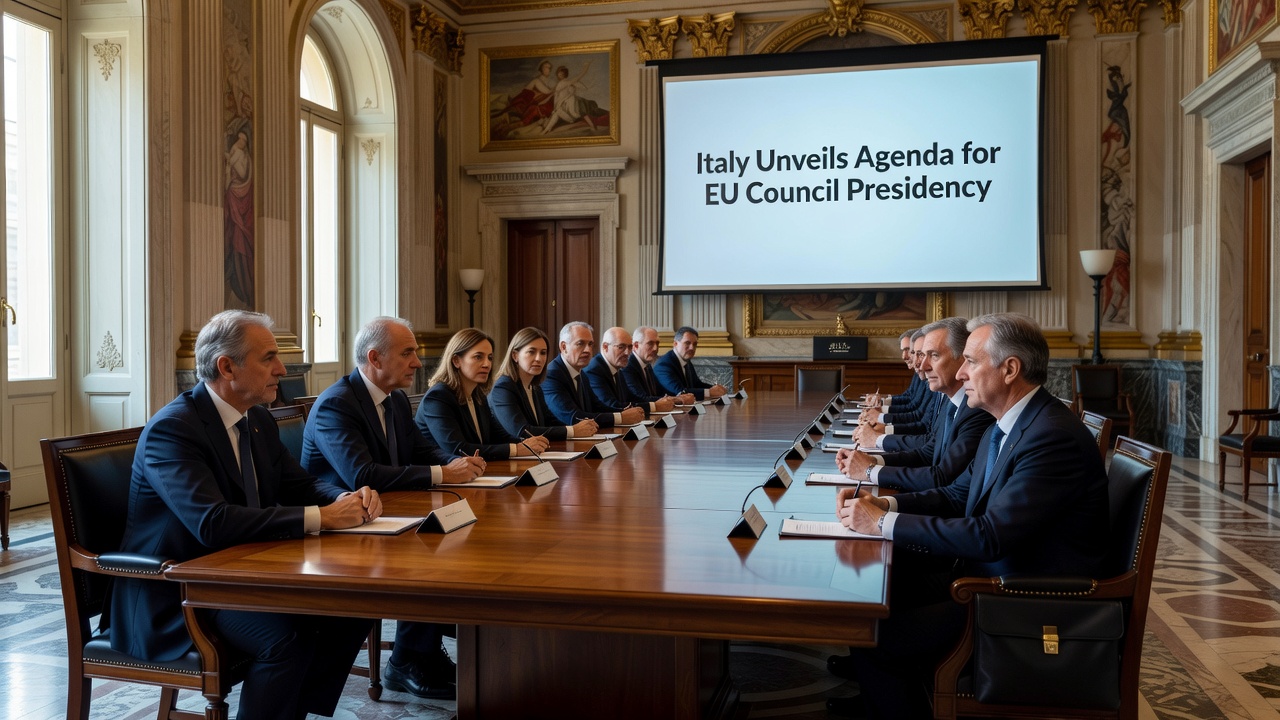
Italy has assumed the rotating presidency of the Council of the European Union with a detailed agenda targeting economic recovery, climate goals, migration management, and geopolitical stability. Officials in Rome stress the need for consensus among the 27 member states during the six-month term.
Economic Resilience and Green Transition
The presidency places strong emphasis on revising EU fiscal rules to balance discipline with investment flexibility. Negotiations will advance on the Stability and Growth Pact reform, the completion of the banking and capital markets unions, and full deployment of the Recovery and Resilience Facility. Italy will host ministerial meetings to accelerate the green transition, including higher renewable energy targets and biodiversity measures aligned with the European Green Deal. Additional priorities cover digital single market rules on artificial intelligence and data governance to boost competitiveness while protecting consumers.
Energy security discussions will focus on diversifying supplies and reducing external dependencies through joint procurement mechanisms. Southern European partners are expected to coordinate positions on Mediterranean infrastructure projects.
Migration Reform and Geopolitical Strategy
Reform of the Common European Asylum System tops the migration file, with proposals for mandatory solidarity and faster returns. Italy seeks stronger Frontex operations and new partnerships with origin and transit countries in North Africa. On external relations, unwavering support for Ukraine through sanctions coordination and reconstruction planning will continue alongside enlargement talks with Western Balkan candidates. Trade negotiations with African and Latin American partners aim to secure critical raw materials and promote sustainable supply chains. Overall, the Italian term seeks pragmatic agreements that reinforce EU unity and global influence.